
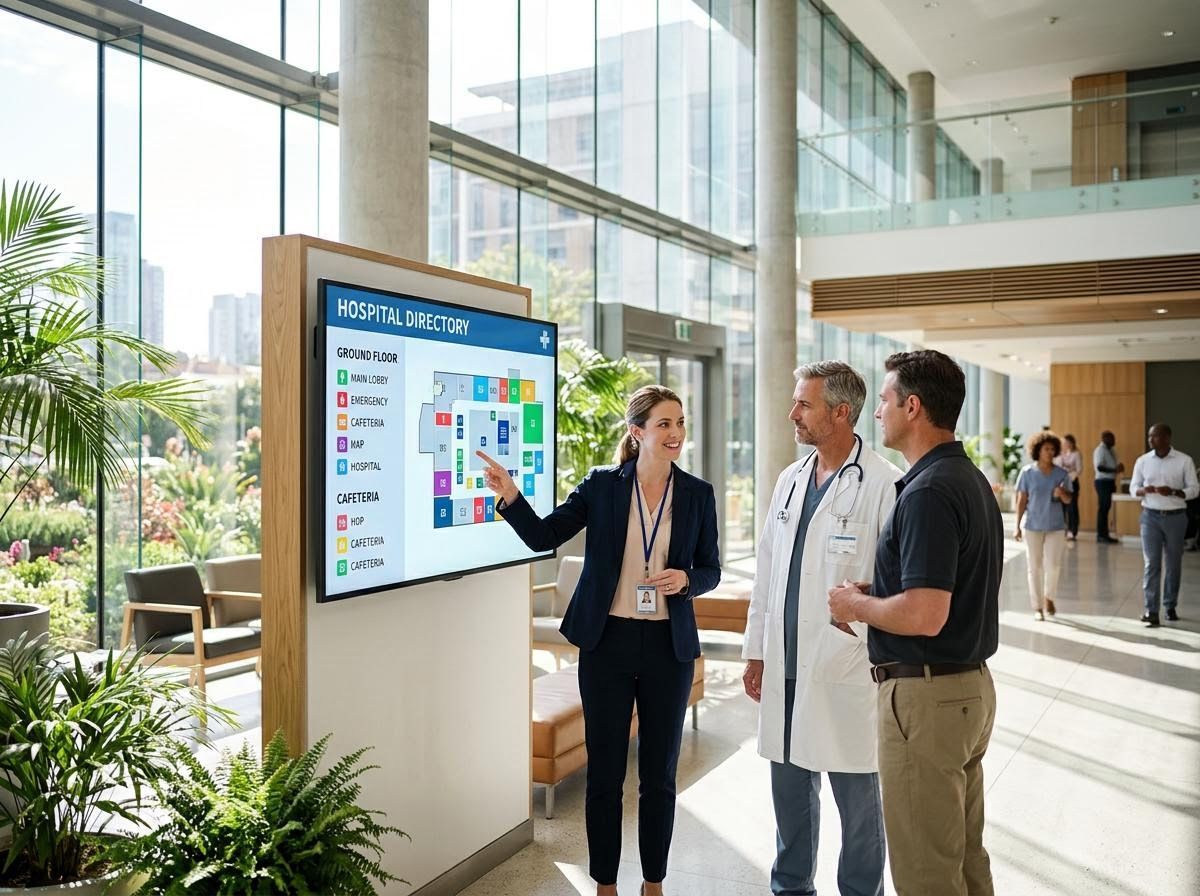
Hospital atriums, often designed with expansive windows and skylights, provide welcoming, light-filled spaces for patients, visitors, and staff. While aesthetically pleasing, these bright environments pose a significant challenge for traditional digital signage, which can appear washed out and unreadable under direct sunlight or intense ambient light. Choosing the right high-brightness display is crucial for ensuring that vital information, directories, or engaging content remains clear and impactful in these challenging conditions. BES Industries understands the unique demands of healthcare environments and the importance of effective communication solutions.
The Unique Illumination Challenges of Hospital Atriums
Standard commercial displays typically offer brightness levels ranging from 300 to 500 nits, which is sufficient for indoor environments with controlled lighting. However, hospital atriums, especially those facing direct sunlight or featuring large glass facades, can experience ambient light levels that far exceed what these displays can counteract. This results in severe glare, reduced contrast, and ultimately, unreadable content. Investing in high-brightness screens is not merely an upgrade; it is a necessity to ensure that information is consistently visible and impactful, contributing positively to patient and visitor experience and operational efficiency.
Key Features of High-Brightness Signage Displays
High-brightness displays are specifically engineered to perform optimally in bright settings. These units boast luminance levels ranging from 1,500 to 3,000 nits or even higher, allowing them to cut through glare and remain vivid. Beyond sheer brightness, these specialized screens often incorporate advanced anti-glare or anti-reflective coatings that further enhance visibility by minimizing reflections. Durability is also a significant factor, as these displays are built to operate continuously in demanding conditions without degradation. When selecting healthcare technology products for such demanding environments, brightness is paramount to effective communication.
Beyond Brightness: Critical Considerations for Healthcare Environments
Selecting an appropriate high-brightness display for a hospital atrium involves more than just its nits rating. Longevity and reliability are critical; these displays must be built to withstand continuous operation, often 24/7, with minimal maintenance. Features like robust casing, temperature management systems, and dust protection contribute to a longer lifespan. Furthermore, integration with existing content management systems (CMS) is essential for seamless updating of information. A specialized healthcare technology product supplier understands the nuances of integrating advanced systems like an LG healthcare TV or a hospital TV into an existing infrastructure, ensuring that the signage not only works technically but also serves the specific communication needs of the institution, from wayfinding to patient education.
The effectiveness of digital signage in sunlit hospital atriums hinges on selecting the right high-brightness displays that can overcome ambient light challenges. By focusing on critical features like high luminance, anti-glare technology, durability, and seamless integration, healthcare institutions can transform challenging spaces into vibrant communication hubs. Understanding these specialized requirements and partnering with an experienced healthcare technology product supplier is key to successful implementation. To learn more about innovative audio-visual solutions tailored for your healthcare facility, explore the range of offerings that BES Industries provides.