
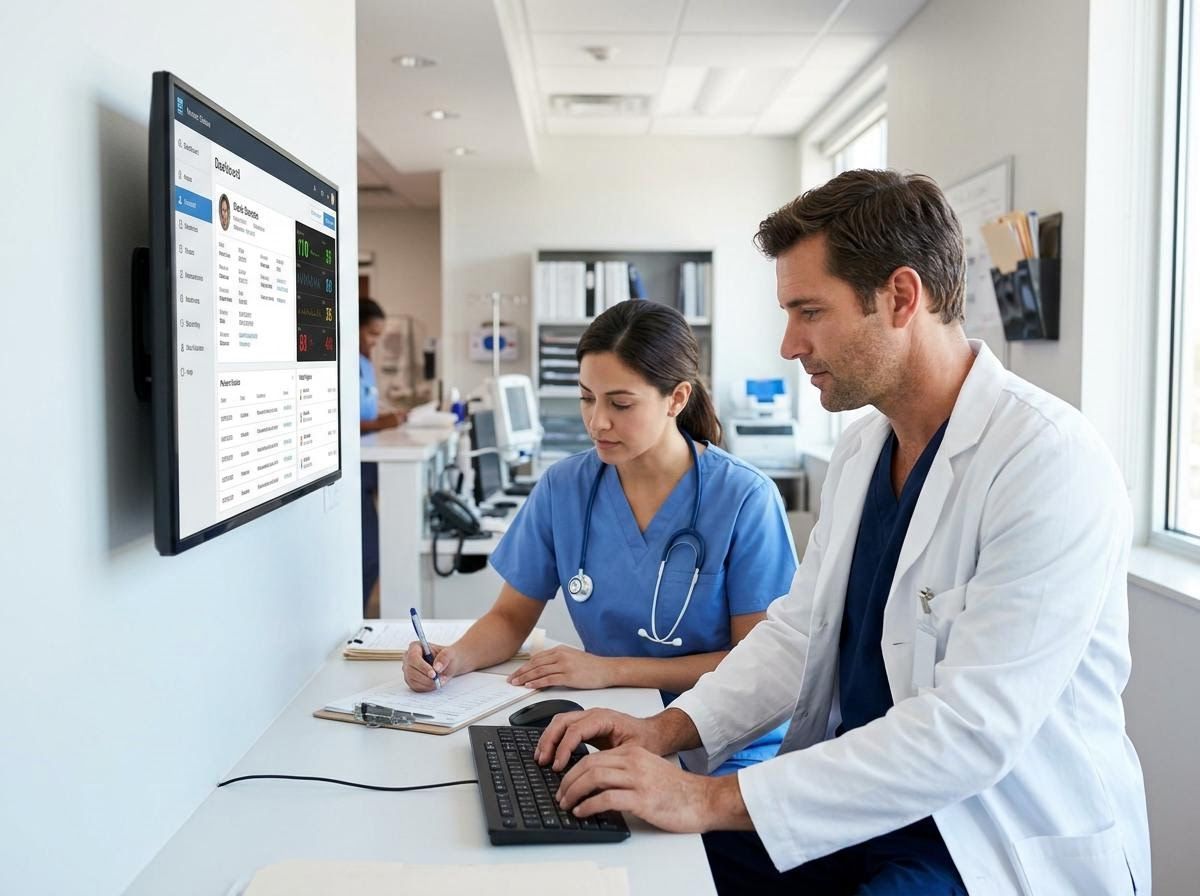
Selecting the appropriate commercial display for a 24/7 clinical environment is a critical decision that impacts patient care, operational efficiency, and long-term cost. In demanding settings where displays are expected to function continuously, their durability becomes paramount. This blog post delves into two primary backlighting technologies—direct-lit and edge-lit—to evaluate which offers superior resilience for the rigorous demands of healthcare facilities. BES Industries understands the importance of reliable infrastructure in these crucial settings.
Understanding Display Backlighting Technologies
Commercial displays rely on backlighting to illuminate their liquid crystal display (LCD) panels. The two dominant methods are direct-lit and edge-lit. Direct-lit displays feature an array of LEDs spread directly behind the entire screen. This allows for precise local dimming and often results in more uniform brightness across the display. In contrast, edge-lit displays place LEDs along the edges of the screen, using a light guide plate to distribute illumination across the panel. Edge-lit designs are typically thinner and can sometimes be more energy-efficient due to fewer LEDs. Both technologies contribute to the wide range of available healthcare technology products.
Direct-Lit Displays: A Durability Champion for Clinical Use
When considering durability for continuous operation, direct-lit commercial displays often present a compelling case, especially for a hospital TV. The distributed placement of LEDs across the entire back panel means that heat generated by the LEDs is spread out over a larger area. This superior heat dissipation is crucial for prolonging the lifespan of components in a 24/7 operating environment, reducing the risk of premature failure due to localized overheating. Furthermore, the more robust internal structure required to house the LED array behind the panel can offer better resistance to physical impacts, a significant advantage in busy clinical settings where equipment might be subject to accidental bumps or movements. These characteristics make them a strong contender for crucial healthcare technology products.
Edge-Lit Displays: Performance Considerations in Healthcare
Edge-lit displays, while offering sleek profiles and sometimes lower initial costs, come with specific durability considerations for 24/7 clinical use. The concentration of LEDs along the edges can lead to localized heat buildup, which, over extended periods of continuous operation, can degrade components faster than in direct-lit designs. This concentrated heat can also contribute to issues like "clouding" or uneven brightness as the light guide plate ages or warps under constant thermal stress. While visually appealing and suitable for many applications, their long-term reliability in high-demand, always-on scenarios, such as displaying vital patient information or an LG healthcare TV in a patient room, may not match the robust performance of direct-lit alternatives. It's essential for healthcare institutions to consult with a knowledgeable healthcare technology product supplier to understand these trade-offs.
Strategic Selection for Long-Term Value
Choosing between direct-lit and edge-lit displays for clinical environments extends beyond initial purchase price or aesthetics. The operational demands of a 24/7 facility necessitate a focus on longevity, reliability, and minimal downtime. While edge-lit displays may be ideal for certain low-usage or aesthetic-driven applications within a healthcare complex, direct-lit displays generally offer superior durability and more consistent performance under constant stress. For critical applications that require continuous operation and high reliability, such as patient information boards or digital signage in emergency rooms, investing in more robust direct-lit healthcare technology products can lead to significant long-term savings by reducing maintenance costs and ensuring uninterrupted service.
Selecting the most durable display technology for healthcare facilities is paramount for maintaining uninterrupted operations and ensuring patient well-being. While both direct-lit and edge-lit displays offer distinct advantages, direct-lit technology often stands out for its superior heat management and physical robustness, making it a more reliable choice for 24/7 clinical environments. By prioritizing durability and performance, healthcare institutions can secure display solutions that consistently deliver, enhancing both staff efficiency and patient experience. To explore reliable audio-visual solutions tailored for your institution's demanding needs, consider consulting with a specialized healthcare technology product supplier like BES Industries.