
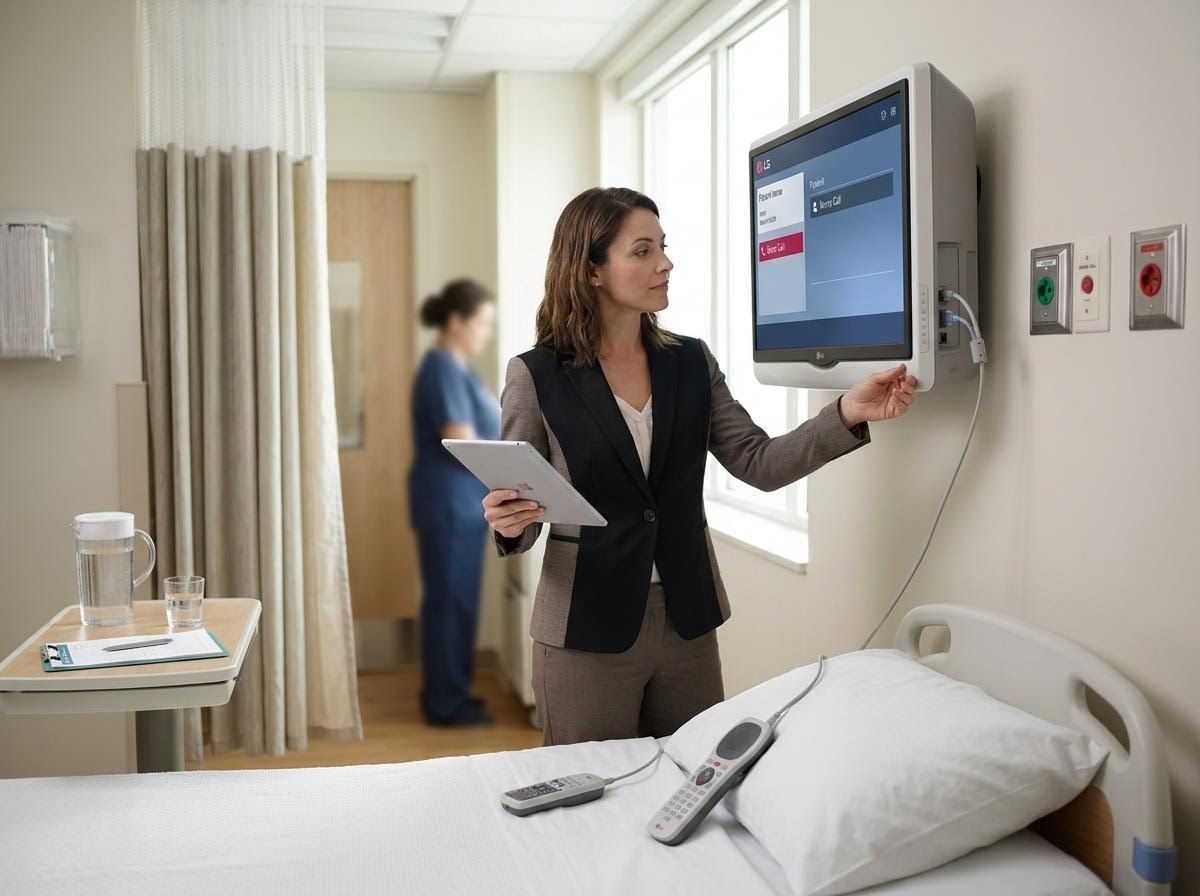
Selecting the right display technology for a healthcare environment goes far beyond simply choosing a television; it involves understanding critical hardware distinctions that impact patient care, operational efficiency, and long-term cost. For procurement professionals, discerning between consumer-grade televisions and their specialized hospital counterparts is paramount. BES Industries recognizes these unique challenges and aims to provide clarity on why these differences matter in delivering optimal solutions for healthcare facilities.
Robustness and Hygiene: Built for Clinical Demands
One of the most significant differences lies in the physical construction and materials. Consumer televisions are designed for typical home use, where they are handled infrequently and exposed to relatively clean environments. In contrast, hospital environments demand products that can withstand constant cleaning with harsh disinfectants, frequent adjustments, and potential physical impacts. Hospital tv units are built with medical-grade plastics and sealed enclosures that prevent the ingress of liquids, dust, and pathogens, ensuring patient safety and longevity. This robust design also minimizes seams and crevices where bacteria can harbor, supporting stringent infection control protocols vital in any healthcare setting.
Specialized Functionality and Integration
Beyond durability, hospital-grade televisions offer specialized features crucial for patient care and facility management. These devices often include integrated pillow speaker ports, allowing patients to control the television, lighting, and even nurse calls from a single, easy-to-use device. Unlike standard consumer models, hospital televisions are designed for seamless integration with patient entertainment systems and communication platforms. Features such as remote management capabilities, channel lockout, and customizable settings ensure that healthcare staff can efficiently control and monitor devices across multiple rooms, providing a tailored and secure patient experience. This specialized functionality distinguishes them as essential healthcare technology products rather than mere entertainment devices.
Enhanced Safety and Compliance Standards
Safety is non-negotiable in healthcare. Hospital televisions adhere to stricter electrical safety and electromagnetic compatibility (EMC) standards compared to their consumer counterparts. They are engineered to minimize electromagnetic interference, which could otherwise disrupt sensitive medical equipment such as pacemakers, monitoring devices, or imaging systems. Additionally, these televisions are designed for continuous operation and often come with certifications that consumer models lack, addressing concerns related to patient well-being and regulatory compliance. Ensuring that all installed equipment, including the lg healthcare tv models, meets these rigorous standards is a critical responsibility for procurement teams.
Making informed procurement decisions for display technology in healthcare settings is crucial for patient comfort, operational efficiency, and compliance. Understanding the fundamental hardware differences between consumer and hospital-grade televisions ensures that institutions invest in solutions built to withstand the unique demands of a clinical environment. As a leading healthcare technology product supplier, BES Industries provides cutting-edge technology and comprehensive support to help your organization make the best choices. Contact us today for help with selecting the ideal specialized equipment to enhance your facility's capabilities and patient experience.