
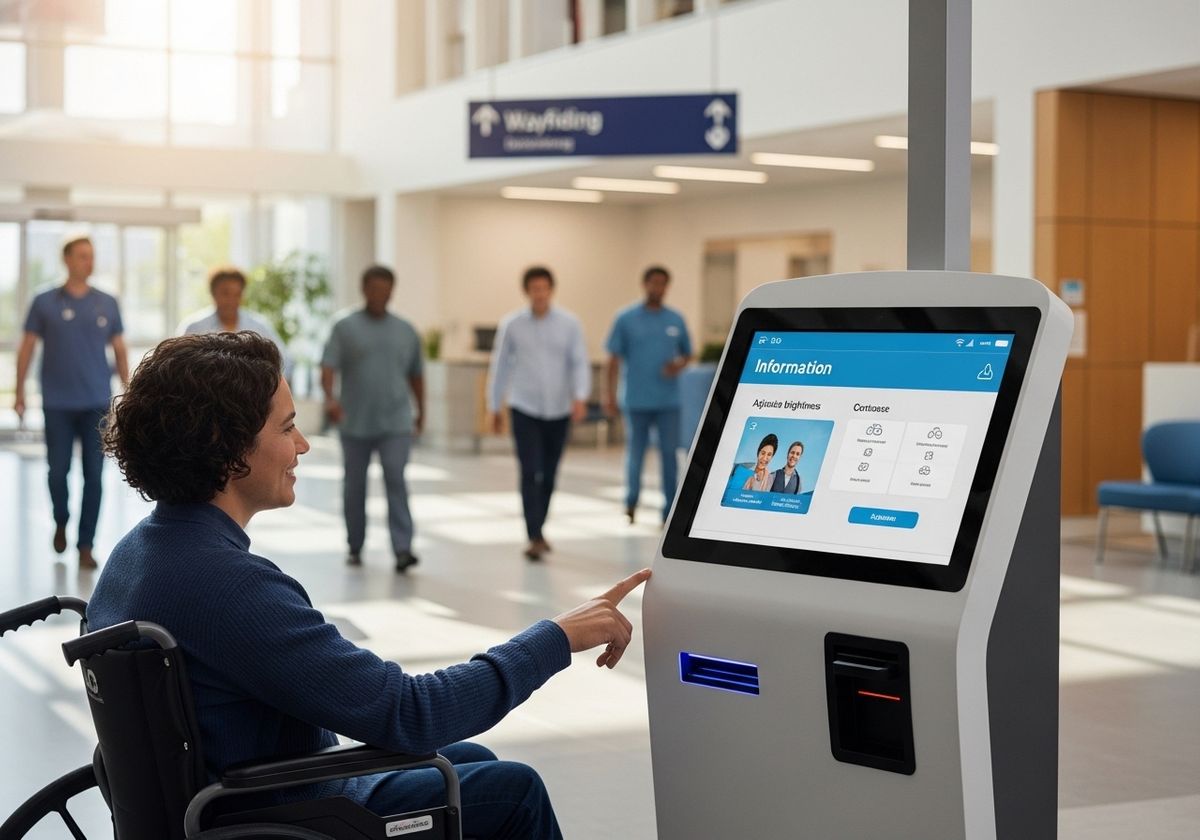
Navigating a hospital can be a stressful experience, especially for individuals with disabilities. Ensuring accessibility isn't just a matter of compliance; it is about providing a welcoming and equitable environment for all patients, visitors, and staff. This is where ADA compliance in hospital wayfinding, particularly concerning kiosks, becomes essential. BES Industries, founded in 2002, understands the importance of creating accessible environments within the healthcare sector.
Understanding ADA Compliance
The Americans with Disabilities Act (ADA) sets standards for accessible design, ensuring that people with disabilities have equal access to goods, services, facilities, and accommodations. In the context of hospital wayfinding, this means that kiosks – often used for directions, check-in, or information – must be designed to be usable by everyone, regardless of their physical or cognitive abilities. Our team recognizes these standards and integrates them into our healthcare solutions.
Key Considerations for Accessible Kiosks
Several factors contribute to making kiosks ADA compliant:
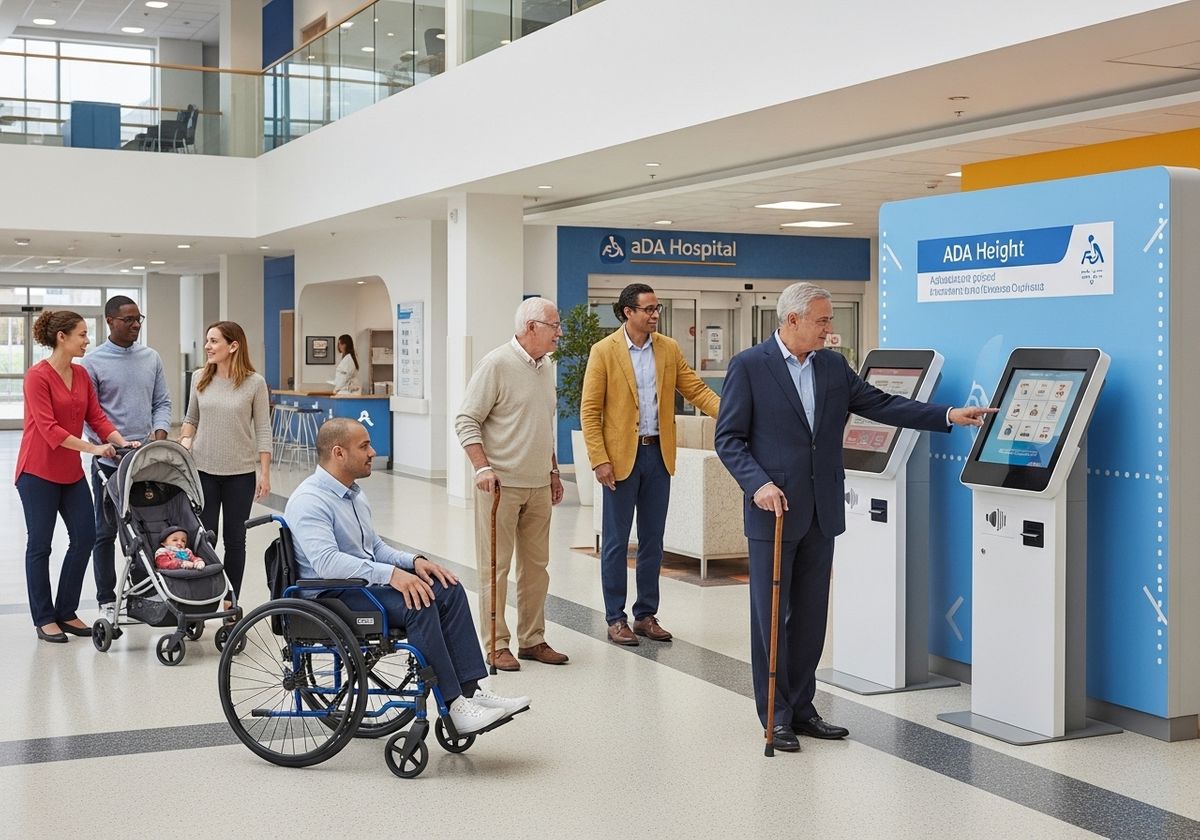
Height and Reach: Kiosks should be positioned so that their screens and controls are within reach for individuals using wheelchairs. This typically means a maximum height of 48 inches for the highest operable part and a forward reach depth that allows comfortable access.
Screen Visibility: Glare and contrast are crucial. Screens should be easily readable in various lighting conditions. Adjustable brightness and contrast settings can further enhance accessibility.
Tactile Input: Incorporating tactile keypads or raised buttons allows users with visual impairments to navigate the kiosk effectively. Braille labels can also be beneficial.
Audio Output: Providing audio instructions and feedback is essential for individuals with visual impairments. A headphone jack should be available for privacy.
Alternative Input Methods: Consider including alternative input methods like voice recognition or touchscreens that are compatible with assistive technologies.
Clear and Simple Language: The information displayed on the kiosk should be written in plain language, avoiding jargon and complex terminology. Visual cues and icons can also aid understanding.
The Role of Audio Visual Equipment and Multimedia Systems
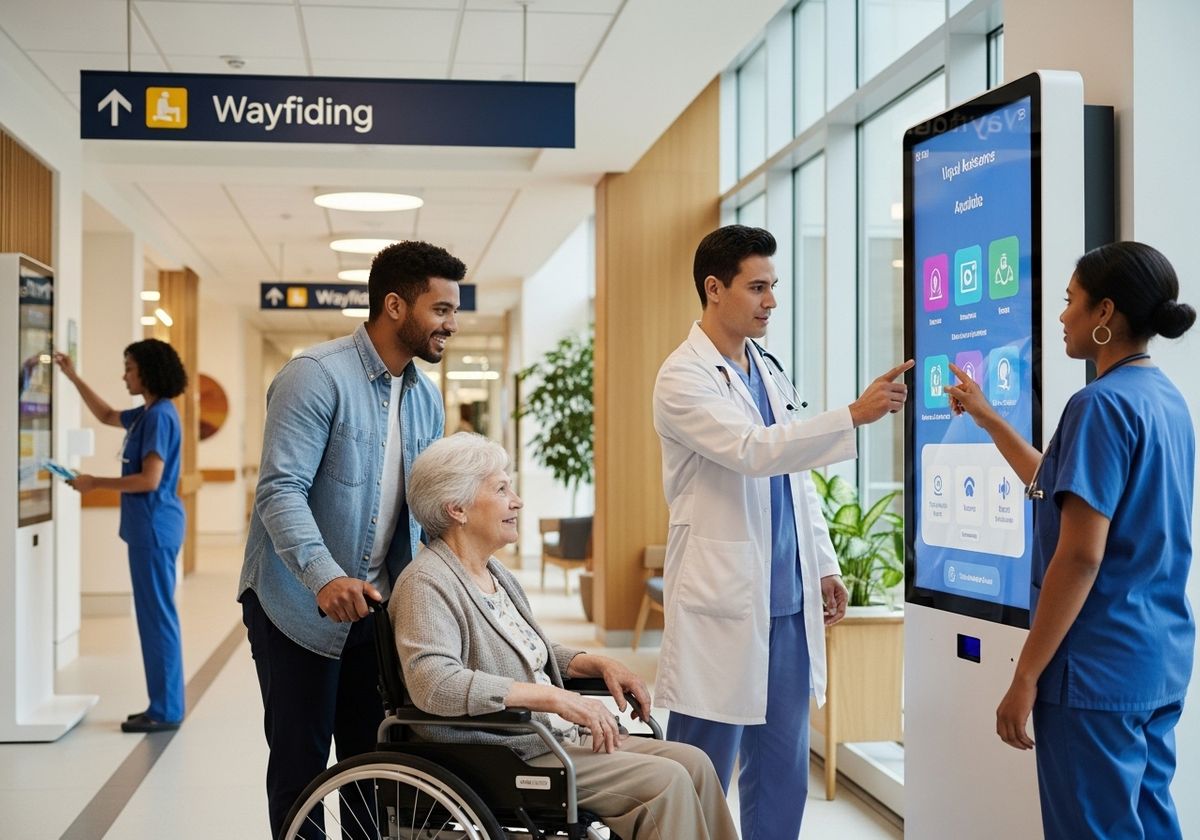
Audio visual equipment and multimedia systems play a significant role in accessible wayfinding. Clear audio instructions, visual aids, and interactive maps can guide individuals through the hospital effectively. Our team specializes in providing cutting-edge technology to streamline operations and enhance experiences, offering comprehensive AV equipment solutions for healthcare facilities.
Benefits of ADA Compliant Kiosks
Implementing ADA compliant kiosks offers numerous benefits that extend far beyond simple accessibility. By ensuring that every individual, regardless of physical ability, can easily navigate a facility and access vital information, these kiosks significantly improve the patient experience by reducing the stress and frustration often associated with hospital visits. From a risk management perspective, they ensure legal compliance, protecting the organization from potential lawsuits and penalties related to accessibility standards.
Accessible kiosks, combined with effective audio-visual equipment and attention to indoor environmental quality, contribute to a positive and stress-free experience for patients, visitors, and staff. BES Industries is dedicated to providing solutions that enhance accessibility and improve the healthcare experience. Contact us today to learn more about our range of healthcare equipment and how we can help you create a more inclusive environment.